


The Origins of Social Christian Traditionalism in Soviet Religious Samizdat of the 1970s: The Case of the Journal Obshchina
https://doi.org/10.53822/2712-9276-2025-4-11-33
Abstract
The samizdat (“self-published”) journal Obshchina
(Community) (1978), together with the underground Christian Seminar on the Problems of Religious Renewal for which it served as an official journal, pursued several interrelated aims: to build a genuine Christian community in the USSR, to restore Orthodox education for laypeople, and to lead people back from materialism and nihilism to the truths of the Gospel. The article examines various dimensions of the journal’s existence, including its editorial orientation, its relationship with state oversight bodies, its engagement with Soviet ideological discourse, and its interaction with the liberal dissident milieu. It argues that, for the first time since the 1960s, the work of Obshchina’s editors and the seminar’s leaders (A.I. Ogorodnikov, V.Yu. Poresh, and others) helped reconstruct a social Christian worldview in Russia in which Christian truths became the primary criterion for social and even political reflection. At the same time, the author contends that Obshchina, despite being uncensored, should not be classified as a dissident publication. The Orthodox intellectuals associated with it did not call for the overthrow of the regime, emigration, or other forms of outright rejection of the state. Rather, they sought to gradually bring the Soviet state and society into the life of the Church, in the expectation that broader transformations would then occur organically. Uncensored social Christian thought thus found itself caught between two forces: the Soviet security apparatus and the spiritual-intellectual pressure of the liberal dissident environment. Social Christian groups were often compelled to reproduce familiar liberal modes of opposition to the Soviet regime, although this dependence was gradually overcome. Their eventual emergence onto an independent path contributed to the later flourishing of Orthodox social traditionalism in the 2010s–2020s. The legacy of Obshchina is valuable above all because it allows for a more impartial view of the forerunners of today’s Orthodox traditionalists.
About the Author
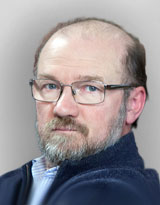
A. V. Shchipkov
Russian orthodox university of Saint John the Divine
Russian Federation
Russian Federation
Alexander Vladimirovich Shchipkov — Doctor of Political Sciences, Rector of Russian Orthodox University of Saint John the Divine, Professor, Faculty of Philisophy, Lomonosov Moscow State University
4, Krapivensky pereulok, Moscow, Russia, 127051
References
1. Barsenkov, A. S., Vdovin, A. I. (2010). Istoriya Rossii. 1917–2009 [History of Russia. 1917–2009]. Moscow : Aspekt Press. [In Russian].
2. Chakrygin, V. N. (1987). O nachinayushchemsya novom etape obshcheevropeyskogo iskusstva [On the Emerging New Stage of Pan-European Art]. Obshchina, 2, 62–67. [In Russian].
3. Horkkhajmer, M., Adorno, T. (1997). Dialektika Prosveshhenija. Filosofskie fragmenty [Dialectic of Enlightenment: Philosophical Fragments] (pp. 57–61). Moscow, Saint Petersburg : Medium, Yuventa. [In Russian].
4. Kinal’, A. V., Miku, N. V. (2015). Khristianskiy seminar po problemam religioznogo vozrozhdeniya (1974–1979 gg.) [Christian Seminar on Problems of Religious Revival (1974–1979)]. Sovremennye nauchnye issledovaniya i innovatsii [Modern Scientific Research and Innovations], 3(3). URL: https://web.snauka.ru/issues/2015/03/48753 (Accessed: 24.07.2025). [In Russian].
5. Milbank, Dzhon. (2022). Teologiya i sotsial’naya teoriya. Po tu storonu sekulyarnogo razuma [Theology and Social Theory: Beyond Secular Reason]. Moscow : Teoestetika. [In Russian].
6. Neuhaus, R. J. (1997). The Naked Public Square: Religion and Democracy in America. Grand Rapids : William B. Eerdmans.Obshchina: zhurnal Khristianskogo Seminara po problemam Religioznogo Vozrozhdeniya [Obshchina: Journal of the Christian Seminar on Problems of Religious Revival] (1978). Vol. 2. Moscow–Leningrad. [In Russian].
7. Po‑drugomu: sb. statey o traditsii i smene ideologicheskogo diskursa [Otherwise: A Collection of Articles on Tradition and the Change of Ideological Discourse] (2017). Moscow : Abris. [In Russian].
8. Poresh, V. (1978). Vasiliy Nikolaevich Chakrygin i problema sobornogo tvorchestva [Vasiliy Nikolaevich Chakrygin and the Problem of Conciliar Creativity]. Obshchina, 2, 57–61. [In Russian].
9. Shchipkov, A. V. (2003). Sobornyy dvor. Publitsisticheskie stat’i: 1991–2001 [The Conciliar Court. Journalistic Articles: 1991–2001]. Moscow : Probel-2000. [In Russian].
10. Shchipkov, A. V. (2021). Diskurs ortodoksii. Opisanie ideynogo prostranstva sovremennogo russkogo pravoslaviya [The Discourse of Orthodoxy: Describing the Ideological Space of Contemporary
11. Russian Orthodoxy]. Moscow : Izd-vo Moskovskoy Patriarkhii Russkoy Pravoslavnoy Tserkvi. [In Russian].
12. Shchipkov, V. A. (2024). Genealogiya sekulyarnogo diskursa [Genealogy of the Secular Discourse]. Moscow : Izd-vo “MGIMOUniversitet”. [In Russian].
Review
For citations:
Shchipkov A.V. The Origins of Social Christian Traditionalism in Soviet Religious Samizdat of the 1970s: The Case of the Journal Obshchina. Orthodoxia. 2025;(4):11-33. (In Russ.) https://doi.org/10.53822/2712-9276-2025-4-11-33
Views:
430
JATS XML



 Email this article